Yes. Glass cosmetic bottles can be customized far beyond simply adding a logo. Depending on the project, brands can customize the bottle shape, capacity, glass color, wall thickness, weight, surface finish, decoration, closure, pump or dropper, and even develop a completely new bottle mold.
For cosmetic brands, the practical question is not whether customization is possible, but which parts of the packaging should be customized to support the product, brand identity, production requirements, and target market. LISSON provides custom glass cosmetic packaging solutions covering design development, prototyping, mold development, decoration, closures, and mass production.
Quick answer: A glass cosmetic bottle can typically be customized in five major areas: structure, appearance, branding, dispensing components, and packaging configuration. The level of customization can range from decorating an existing bottle to developing a completely new bottle shape and mold.
What Can Be Customized on a Glass Cosmetic Bottle?
A custom glass cosmetic bottle is not limited to a custom logo. For a new skincare, serum, lotion, foundation, or beauty product, several packaging elements can be developed together.
| Customization Area | Typical Options |
|---|---|
| Bottle Structure | Shape, capacity, dimensions, wall thickness, weight and base design |
| Glass Appearance | Clear, colored, frosted, coated and gradient finishes |
| Branding | Silk-screen printing, hot stamping, labeling, logos and artwork |
| Closures | Metal caps, bamboo caps, PCR caps, decorative caps and custom collars |
| Dispensing | Lotion pumps, treatment pumps, droppers, spray pumps and applicators |
| Mold Development | Existing mold adaptation or completely new custom bottle molds |
1. Bottle Shape and Dimensions Can Be Customized
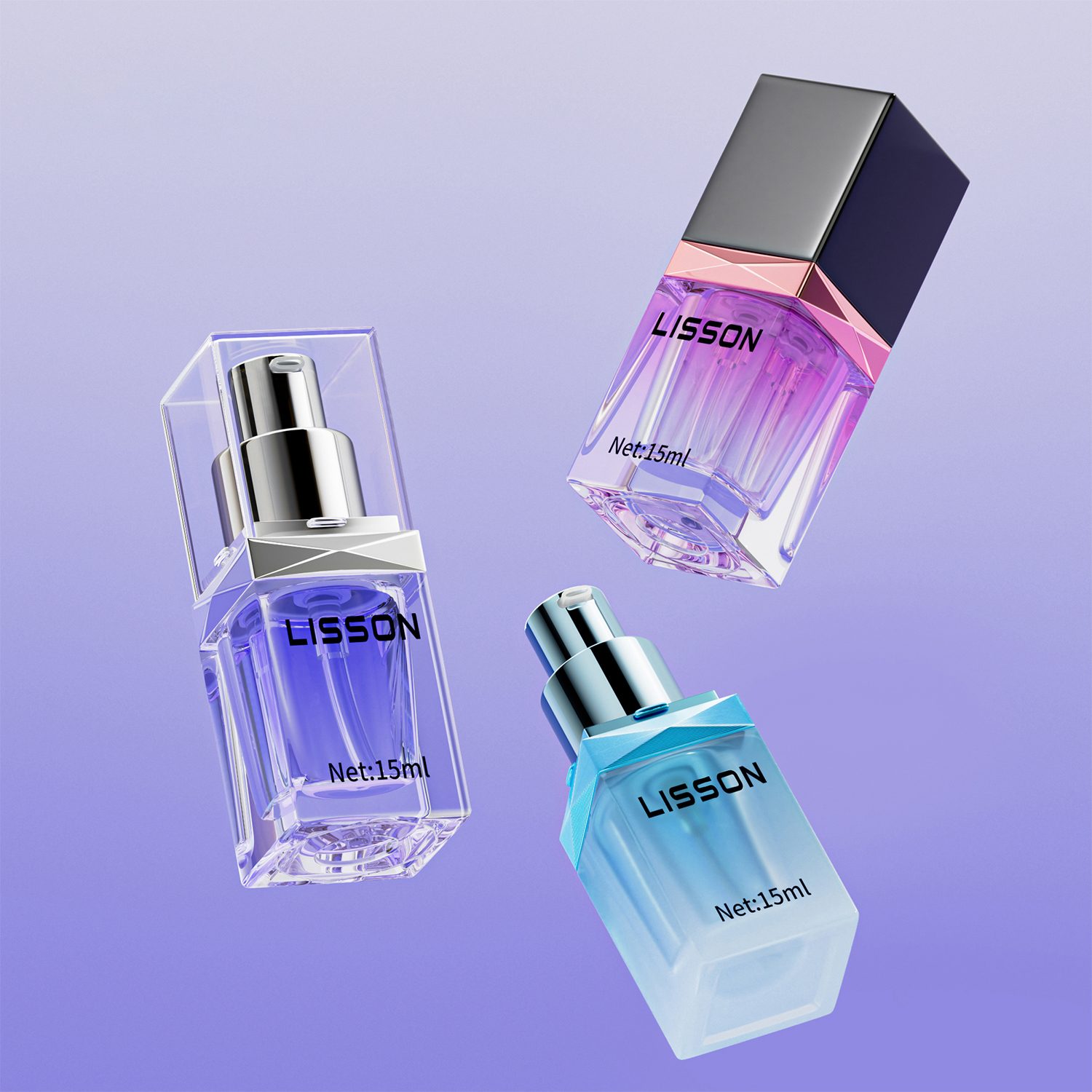
The bottle shape is one of the most visible parts of cosmetic packaging. Brands can start with a standard cylindrical, square, rectangular, oval, tapered, or other existing shape. For a more distinctive package, a custom mold can be developed around a specific design concept.
This is particularly useful when a cosmetic brand wants its packaging to be recognizable from a distance. A distinctive shoulder, base, silhouette, or cap-to-bottle proportion can become part of the product identity.
For brands looking for ready-to-adapt skincare packaging, LISSON's glass skincare bottle collection includes multiple bottle formats that can be used as a starting point for customized cosmetic packaging.
2. Capacity, Glass Thickness, and Weight Can Be Adjusted
Customization also involves the physical specifications of the bottle. Depending on the product, a brand may need a compact 15ml or 30ml format for a serum or eye treatment, while a lotion or skincare product may require a larger 100ml or 120ml bottle.
Glass thickness and bottle weight also influence the overall hand feel. A heavier base can create a more substantial premium impression, while a lighter structure may be more suitable when transportation weight and packaging efficiency are important.
The right specification should therefore be determined together with the formula, filling process, dispensing system, expected usage, and target market rather than based only on appearance.
3. Glass Color and Surface Finish Offer Many Branding Options
A clear glass bottle is only one option. Cosmetic packaging can use frosting, color coating, gradient effects, matte finishes, glossy finishes, or other surface treatments to create a specific visual direction.
For brands with strict visual guidelines, Pantone color matching can also be used for customized packaging. This makes it possible to coordinate the bottle, cap, pump, and other components with an established brand color system.
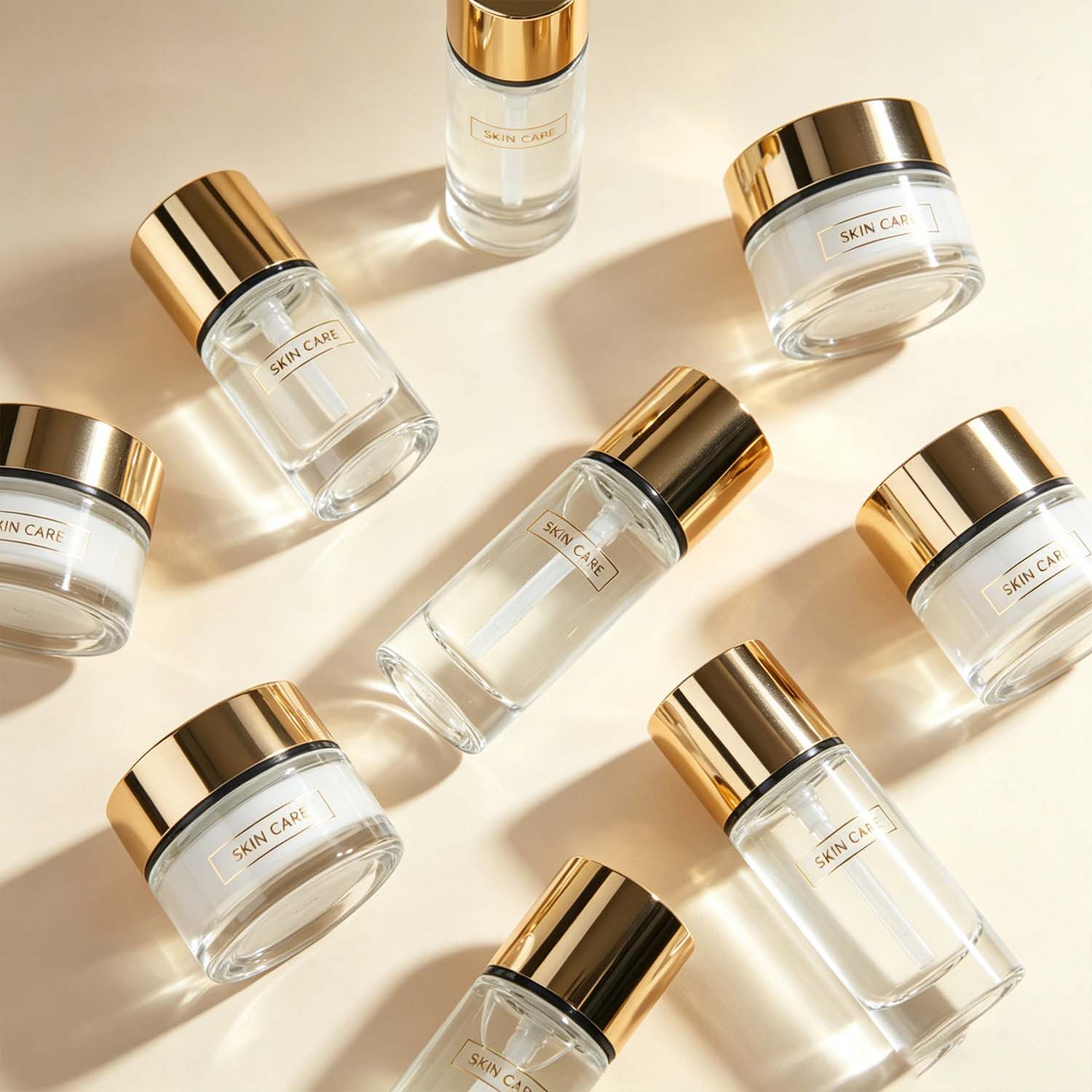
For example, LISSON's luxury clear glass cosmetic bottle and jar packaging set supports customized colors, logo branding, spraying, electroplating, frosting, and other decoration options.
4. Logos and Decorative Details Can Be Customized
Branding is another important customization layer. Depending on the desired appearance and production requirements, cosmetic glass packaging can use silk-screen printing, hot stamping, labeling, UV decoration, electroplating, or other finishing techniques.
For premium products, the logo does not always need to be large. A small, carefully positioned logo combined with a distinctive bottle shape, metallic decoration, or frosted finish can create a more understated packaging style.
The key is to select the decoration method according to the bottle surface, artwork, desired durability, production volume, and visual effect.
5. Caps, Pumps, and Droppers Can Be Customized Too
The dispensing system is part of the packaging experience. A serum may require a dropper, a lotion may use a pump, and a fragrance product may need a spray atomizer. The cap and collar can also be selected or customized to create a consistent appearance.
This means a brand does not necessarily need to design the glass bottle separately from the closure. Bottle neck dimensions, pump compatibility, cap design, and dispensing performance should be considered together.
For serum, facial oil, and other precision-dosing products, LISSON's glass dropper bottle range provides several formats that can be customized for different cosmetic applications.
6. A Completely New Custom Mold Is Also Possible
If an existing bottle does not match the brand concept, a completely new mold can be developed. This provides significantly more freedom over the bottle's silhouette, proportions, shoulders, base, and other structural details.
However, a new mold is more involved than simply decorating an existing bottle. Mold complexity, bottle geometry, production requirements, sampling, and expected order volume all need to be considered before development begins.
LISSON describes its custom packaging process as a sequence that includes concept consultation, bottle selection, 3D and artwork development, mold and sampling, decoration, and finally production and delivery. This type of process allows brands to validate the design before moving into larger-scale production.
For brands considering a new bottle design, the custom glass bottle development service can be used to discuss the design, mold, decoration, and manufacturing requirements together.
Is It Better to Customize an Existing Bottle or Create a New Mold?
There is no single answer for every cosmetic brand. The choice usually depends on how distinctive the packaging needs to be, the available development budget, the expected order volume, and the launch timeline.
| Approach | Suitable When | Customization Level |
|---|---|---|
| Existing Bottle + Decoration | Fast launch or lower development complexity | Moderate |
| Existing Bottle + Custom Cap/Pump | Brands wanting a more distinctive packaging system | Moderate to High |
| Custom Glass Mold | Unique brand identity or signature packaging | High |
| Complete Turnkey Packaging | Brands developing a coordinated bottle, closure and decoration system | Very High |
What Should You Prepare Before Requesting Custom Glass Cosmetic Bottles?
A clear project brief can make the quotation and development process much more efficient. Before contacting a manufacturer, it is useful to prepare the following information:
- Product type, such as serum, lotion, cream, foundation, oil, or fragrance
- Target bottle capacity
- Preferred bottle shape or reference images
- Desired glass color or finish
- Logo and artwork requirements
- Preferred pump, dropper, sprayer, or cap
- Expected order quantity
- Target market and product positioning
- Required packaging or assembly configuration
- Expected development and delivery timeline
If you already have a sketch, reference bottle, CAD drawing, product sample, or brand guideline, sharing those materials can help the manufacturer understand the project more accurately.
How Much Customization Is Practical for Different Cosmetic Products?
The appropriate customization level often depends on the type of cosmetic product.
| Product | Common Packaging Priorities |
|---|---|
| Facial Serum | Dropper, precise dosing, compact size, premium glass and branding |
| Lotion | Pump compatibility, larger capacity, comfortable handling and decoration |
| Face Cream | Glass jar shape, cap design, surface finish and coordinated packaging |
| Foundation | Pump or dispenser, compact dimensions, branding and color coordination |
| Fragrance | Bottle silhouette, glass weight, cap, atomizer, decoration and visual identity |
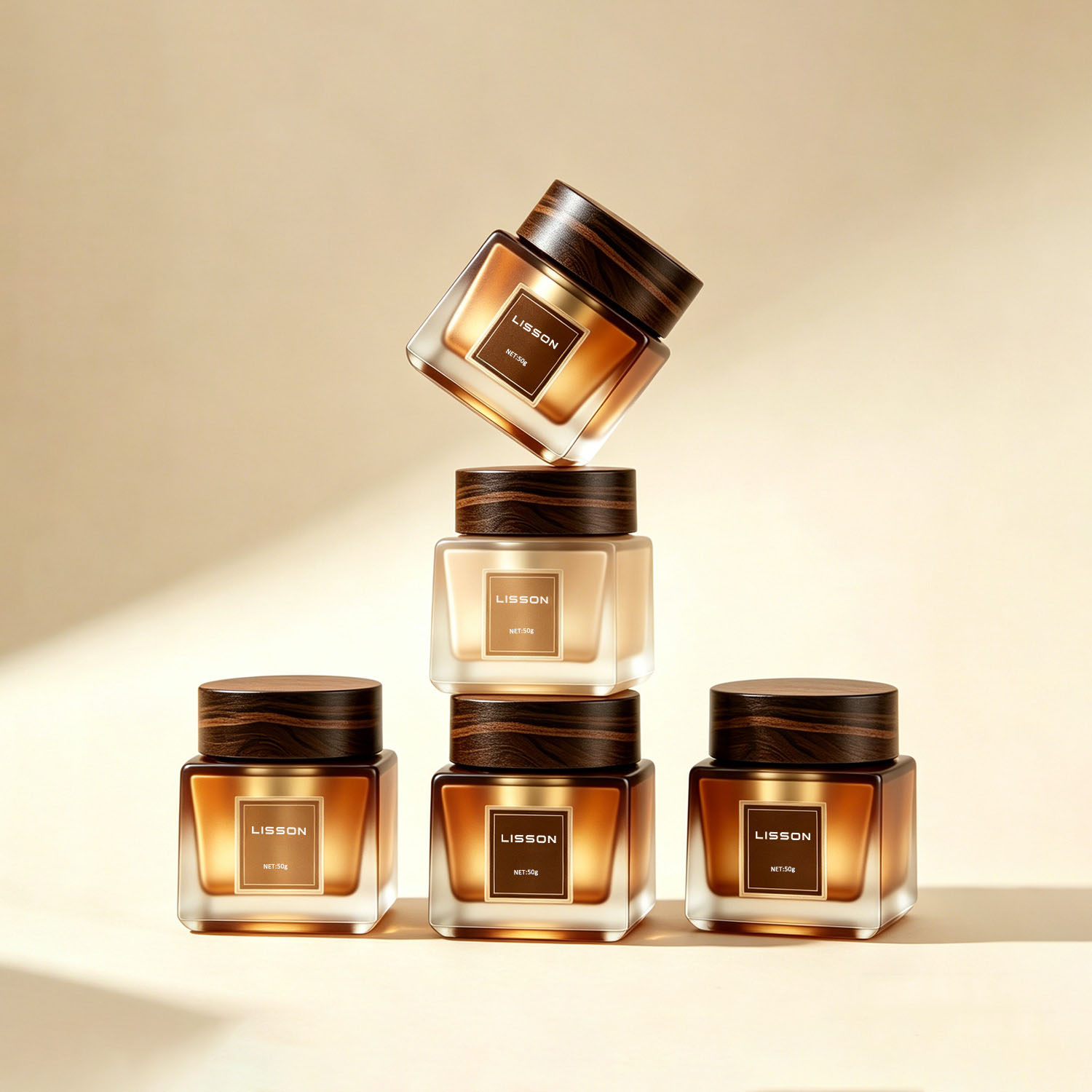
For brands developing multiple products at once, a coordinated packaging family can also be created. LISSON offers cosmetic glass bottle sets that combine bottles and jars into a more consistent packaging system.
What Is the Difference Between Customization and OEM/ODM Packaging?
These terms are related but are not exactly the same. Customization generally means modifying packaging elements such as shape, color, decoration, capacity, closures, or dispensing components. OEM packaging can involve producing packaging according to a brand's specifications, while ODM support may involve adapting an existing design or developing packaging based on the manufacturer's capabilities.
For a brand that already has a bottle drawing, the manufacturer may focus on engineering, mold development, sampling, production, and decoration. For a brand that only has a product concept, the manufacturer may become more involved in packaging development and component selection.
How Does Customization Affect Cost and Lead Time?
The cost and development time depend heavily on the level of customization. Adding a logo to an existing bottle is generally a different project from creating a completely new bottle mold with a custom closure and multiple surface treatments.
Factors that can influence the project include mold complexity, bottle geometry, glass specifications, decoration methods, closure requirements, order quantity, sampling requirements, and packaging configuration.
For this reason, a manufacturer should evaluate the complete packaging specification rather than provide a meaningful cost estimate based only on the bottle's appearance.
Frequently Asked Questions About Custom Glass Cosmetic Bottles
Can glass cosmetic bottles be made in a completely custom shape?
Yes. A new glass bottle mold can be developed when an existing bottle does not meet the brand's design requirements. The final feasibility depends on the proposed geometry, manufacturing requirements, and project specifications.
Can I customize the color of a glass cosmetic bottle?
Yes. Depending on the packaging design, customization can include glass color, coating, frosting, gradient effects, matte or glossy finishes, and Pantone color matching.
Can the cap and pump be customized together with the glass bottle?
Yes. Cosmetic packaging projects can include customized caps, collars, lotion pumps, treatment pumps, droppers, spray pumps, and other dispensing components. Compatibility between the bottle neck and closure should be confirmed during development.
Can I add my logo to a custom glass cosmetic bottle?
Yes. Common branding options include silk-screen printing, hot stamping, labeling, UV decoration, electroplating, and other finishing methods depending on the design.
Is a new mold always necessary for custom glass bottles?
No. A brand can often start with an existing bottle and customize its color, finish, logo, cap, pump, or other components. A new mold becomes relevant when the desired bottle structure cannot be achieved with an existing design.
What information should I provide when requesting a custom glass bottle quotation?
Provide the product type, target capacity, bottle shape, reference images or drawings, glass color, surface finish, logo requirements, dispensing system, expected quantity, and target delivery timeline. More complete specifications generally make the quotation process more efficient.
Final Takeaway
Glass cosmetic bottle customization can range from simple logo decoration to a completely new packaging system. Brands can customize the bottle shape, size, weight, glass appearance, surface treatment, branding, cap, pump, dropper, and other components. For highly distinctive packaging, a new custom mold can also be developed.
The most practical approach is to decide which elements genuinely need customization before production begins. If the goal is a faster launch, an existing bottle with customized decoration may be enough. If the packaging itself needs to become part of the brand identity, a custom bottle mold and coordinated closure system may provide more design freedom.
For cosmetic brands developing a new packaging project, LISSON provides integrated support covering bottle development, customization, decoration, closures, sampling, and manufacturing. This allows the packaging specification to be considered as one complete system rather than as separate components.